Pay in installments of $6.79 with
 ,
,
 and
and

Shipping Estimate
USA
- USA
- CAN
- USA
- CAN
Ships within 48 hours · Estimated delivery Oct 14 - Oct 19
 Promo Codes Available:
For Your Every Summer RSVP, with Code: SUMMER15
Description
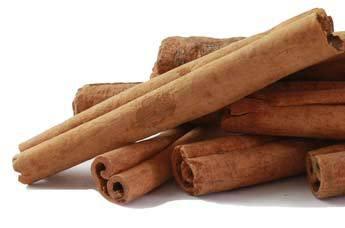
cinnamon plant part used Cinnamon SticksCinnamon Sticks CINNAMOMUM CASSIA (Organically Grown) Available in 1OZ. COMMON NAME Standardized: cinnamon Other: cassia, cassia bark, Chinese cassia, Chinese cinnamon, canela de la China (Spanish), twak (in Ayurveda), rou gui (Chinese) BOTANICAL NAME Cinnamomum burmannii (Nees & T. Nees) Nees ex Blume Plant Family: Lauraceae PARTS USED Bark and leaf. OVERVIEW Cinnamon was utilized extensively thousands of years ago and is still popular today. Enjoyed
Cinnamon Sticks - CINNAMOMUM CASSIA
(Organically Grown) Available in 1OZ.
COMMON NAME
Standardized: cinnamon
Other: cassia, cassia bark, Chinese cassia, Chinese cinnamon, canela de la China (Spanish), twak (in Ayurveda), rou gui (Chinese)
BOTANICAL NAME
Cinnamomum burmannii (Nees & T. Nees) Nees ex Blume
Plant Family: Lauraceae
PARTS USED
Bark and leaf.
OVERVIEW
Cinnamon was utilized extensively thousands of years ago and is still popular today. Enjoyed since ancient times, cinnamon was mentioned in ancient Egyptian texts, the Bible, and was widely traded thousands of years ago in Europe and in Asia by Arab spice traders. Its scent is uniquely warming, uplifting, and stimulating, and its flavor sweet and delicious, hence the flavor and aroma have been utilized in countless confectionaries, baked goods, perfumes, cosmetics, beverages, and cordials. Recent scientific studies validate many of the traditional uses of this medicinal spice, indicating its health enhancing properties.
HISTORY AND FOLKLORE
Cinnamomum sp. appears in recorded history dating back to at least 1,700 years B.C.E where it was a component of embalming fluid in ancient Egypt. The Arabs were avid spice traders who provided this spice to the ancient Romans, Greeks, and Hebrews. These cultures treasured cassia as a culinary spice, utilizing it in perfumes and medicines. Chinese cassia buds have been used in Europe since the Middle Ages, as their aroma is similar to the bark. It is believed that they were part of a spiced wine referred to as 'Hippocras'. European explorers considered cassia and other varieties of cinnamon to be the most sought after spices of the 15th and 16th centuries and by the 17th century, cassia was considered a common kitchen spice. By the 19th century, cassia was commonly used medicinally to support and soothe digestion. It is a component of 'garam masala', a spice used in Indian cooking comprised of turmeric, peppercorns, cloves, cumin, and cardamom. Further, it is found in many Middle Eastern and North African dishes, as a spice for lamb or stuffed eggplant.
As C. aromaticum is native to China, it has been used there extensively for thousands of years in TCM (traditional Chinese medicine). It is believed to balance the spleen, kidney, heart, and liver meridians and to stimulate circulation and the movement of 'chi' or energy. It is considered to be warming to the kidneys and is particularly useful in cold or stagnant conditions. In Ayurveda (traditional Indian system of healing) cassia is referred to as 'twak' and believed to support the respiratory, digestive, nervous, circulatory, urinary, and reproductive systems. Cassia is a highly valued and multipurpose medicinal herb. According to the Ayurvedic practitioner, Karta Khalsa, "the classic patient who can benefit from cinnamon is cold, dry, and frail. Cinnamon is considered to be a warming herb that is stimulating to the circulatory system and soothing for the digestive system.
Cassia oil is used extensively as a flavoring for soft drinks, baked goods, sauces, confectioneries and liqueurs. It is distilled from a mixture of leaves, twigs and bark, and must be used with caution as a fragrance as it does have skin sensitizing properties.
USES AND PREPARATIONS
Dried inner bark as a spice (in rolled whole form referred to as 'quills'), tea, potpourri
Fresh bark, twigs and leaves distilled as an essential oil.
PRECAUTIONS
Specific: Not for use in pregnancy except under the supervision of a qualified healthcare practitioner.
General: We recommend that you consult with a qualified healthcare practitioner before using herbal products, particularly if you are pregnant, nursing, or on any medications.
*These statements have not been evaluated by the Food and Drug Administration. These products are not intended to diagnose, treat, cure or prevent any disease.*
Shipping Notes
- Free Standard Shipping on $100+ Orders to the USA.
- Except Preorder products are shipped in 48 hours.
- Delivery to the USA:
- Standard Shipping : 3-10 business days
- If time is of the essence, please consider selecting expedited delivery for faster service.
Exchange/Return Notes
- We offer a 30-day return/exchange service after receiving.
- Final sale items are not eligible for returns or exchanges.
- To process your return/exchange, please contact us at [email protected]
- Please click here for more details>>> Return & Exchange Policy